Blog

The Real Cost of Staying Manual

The Real Cost of Staying Manual: Why “Too Expensive” Is the Wrong Question

Introduction: Why the Monthly Fee Isn’t the Real Cost

When NDT service companies consider moving from paper and spreadsheets to a digital platform, one objection comes up repeatedly: “It costs too much.”

It’s natural to focus on the monthly subscription fee. After all, inspection companies run lean, and margins can be tight. But focusing only on the software cost ignores the hidden expenses of staying manual, costs that don’t appear on invoices but show up in wasted time, lost revenue, and higher risk.

The real question isn’t “How much does a digital platform cost?” It’s “What is the cost of continuing without one?”


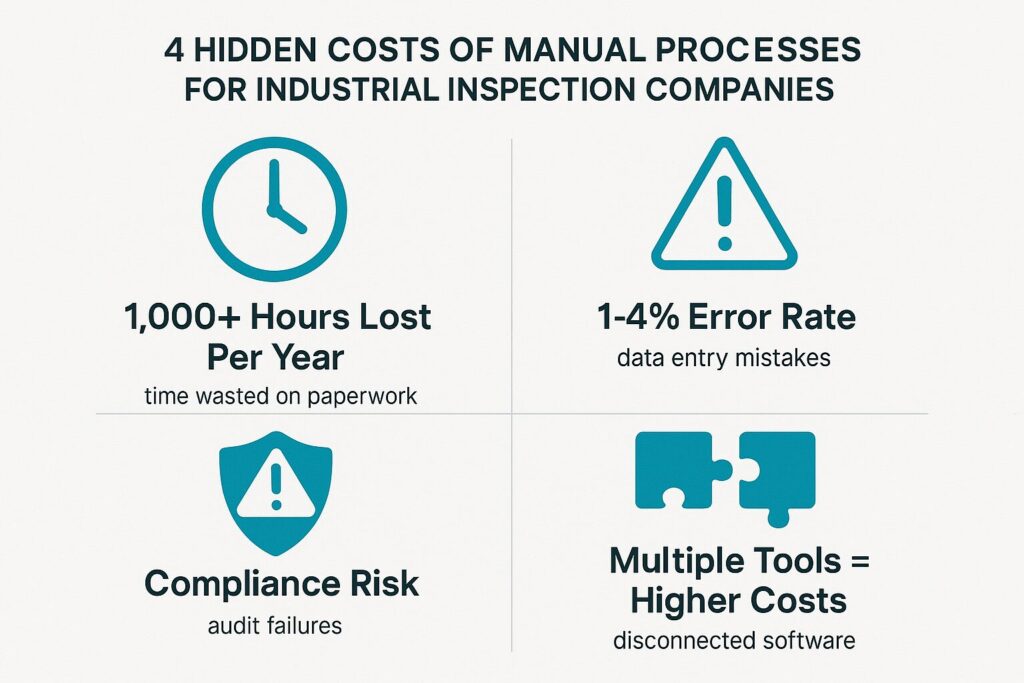
The Hidden Costs of Manual Processes

1. Time lost to paperwork

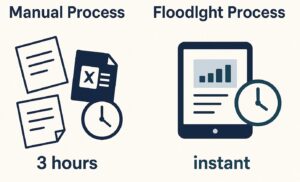
Inspectors often spend 2 to 3 hours after a field job transcribing handwritten notes into Excel or formatting reports in Word. For a 10 person company, even 2 hours per inspector per week adds up to 1,000+ hours per year lost to paperwork, the equivalent of half a full time employee doing nothing but administrative work.

That’s not inspection work. That’s not billable time. That’s pure overhead.

Industry Expert Insight:
“Admin tasks take up 30% of an average technician’s working hours — slightly more than the 29% they spend delivering their actual services.”
— Salesforce “3 Field Service Trends Today’s Leaders Need to Know”

2. Errors and rework

With manual data entry, mistakes are inevitable. A missing weld ID, a transposed measurement, or an incorrectly transcribed reading can delay projects, trigger re inspections, and frustrate clients. The cost isn’t just internal time, it’s also reputational damage and potential liability.

3. Compliance risk

NDT inspections exist to prove safety and compliance. Paper forms and spreadsheets are harder to audit, easier to lose, and more prone to inconsistency. A failed audit or lost certification record can result in fines, liability exposure, or worse: loss of client trust and future contracts.

4. Multiple disconnected tools

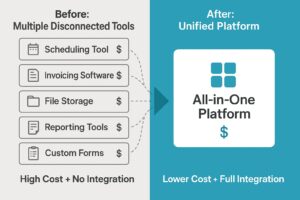
Most companies that aren’t on a unified platform are already paying for a patchwork of solutions: scheduling software, quoting apps, invoicing systems, file storage subscriptions. Each one comes with its own monthly fee, and none of them talk to each other.

When you add up these hidden costs, the subscription fee for a purpose built digital platform often looks small by comparison.


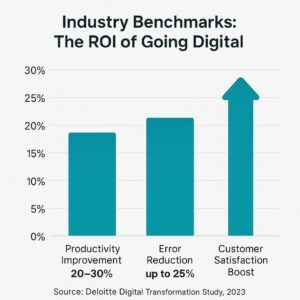
Industry Benchmarks: The ROI of Going Digital

Studies across field service and inspection heavy industries show consistent results:

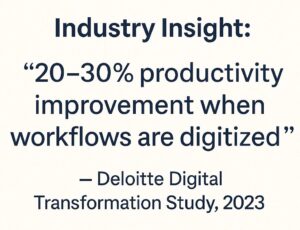
    • 20 to 30% productivity improvements once workflows are digitized
      For a 10-person shop, that’s reclaiming 200-300 hours per year, enough to take on 2-3 more projects without hiring.
    • Error reduction of up to 25% when reports are standardized and automated
      Fewer callbacks, less rework, and happier clients who don’t have to ask for corrections.
    • Customer satisfaction improvements tied directly to faster reporting and easier record access
      Same-day reports and client portals mean more repeat business and referrals.

Digital Transformation Impact:
“Companies implementing comprehensive FSM software report productivity increases averaging 24% within the first year.”
— Field Service Management Software Statistics (September 2025)


Consolidation = Direct Savings

Floodlight isn’t just another tool you’re adding to your tech stack. It replaces multiple disconnected systems with a single platform built specifically for NDT:

  • Scheduling → Eliminate standalone dispatching tools
  • Quoting & invoicing → Replace general purpose accounting add ons
  • Reporting → Remove the endless Excel/Word formatting cycle
  • Customer portal → No need for separate file sharing subscriptions


This consolidation means you’re not just paying for software, you’re eliminating redundant costs and gaining integrated workflows that actually talk to each other.

Industry Analyst Perspective:
“Organizations that consolidate their technologies and shed their point solutions see cost savings almost immediately, as well as organizational and personnel efficiencies in the long run.”
— Imagine Software


What Digital Costs vs. What Manual Costs

When you’re weighing the decision to go digital, it helps to see the real numbers side by side. Below is what companies typically spend on software versus what they’re already losing to manual processes, broken down by company size.

Here’s the breakdown based on your company size:

Company Size Software Cost/Year Manual Waste/Year Net Savings
10-50 inspectors $7,800-$45,000 $88,000-$500,000 $43,000-$492,000
50-100 inspectors $45,000-$90,000 $438,000-$1,000,000 $348,000-$955,000
100-500 inspectors $90,000-$450,000 $875,000-$5,000,000 $425,000-$4,910,000
500-1,000 inspectors $450,000-$900,000 $4.4M-$10.0M $3.5M-$9.6M
1,000-2,500 inspectors $900,000-$2.25M $8.8M-$25.0M $6.6M-$24.1M
2,500+ inspectors $2.25M+ $22M-$25M+ $19.8M-$22.8M+

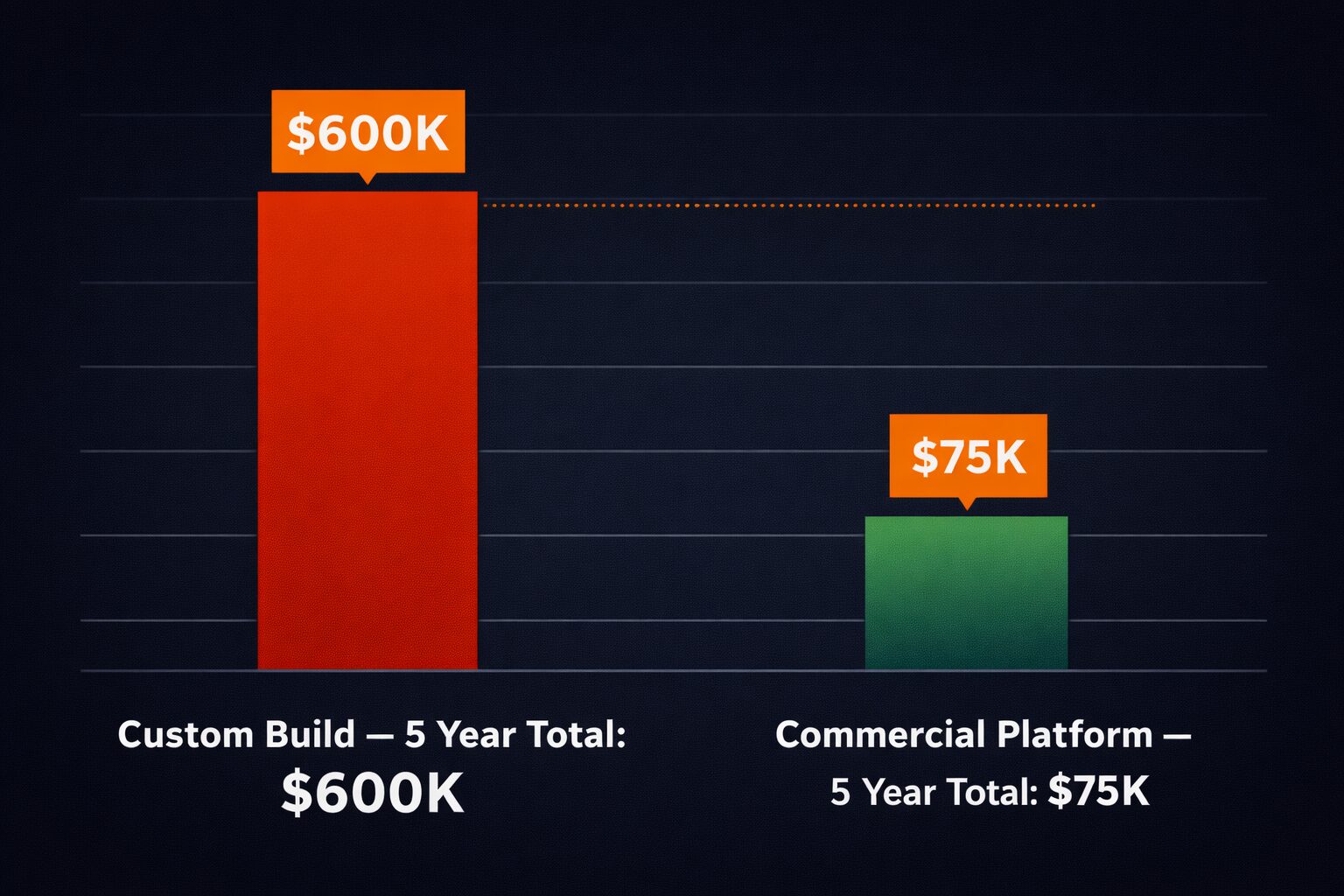
Bottom line: The software typically costs about 10-15% of what you’re already wasting on manual processes. The other 85-90% goes straight back into your business.

The real question: Would you rather keep losing $100,000+ per year to inefficiency, or spend $10,000-$30,000 to fix it?


What Happens If You Wait

Here’s what’s happening right now while you’re staying manual:

  • Your competitors are delivering same-day reports. How many repeat customers are you losing?
  • Asset owners are demanding digital portals. Some are already cutting manual companies from their approved vendor lists.
  • Auditors expect digital records. Paper files and spreadsheets don’t cut it anymore.
  • Buyers want digital companies. If you’re thinking about selling in the next 5-10 years, staying manual lowers your company’s value.

The longer you wait, the further behind you fall.

Competitive Reality:
“73% of consumers will switch to a competitor after multiple bad experiences, and more than 50% will switch after only one bad experience.”
— Zendesk Customer Service Statistics 2025


Case Example: Two Companies, Different Trajectories

Consider two 20 person inspection firms:

Company A (stays manual):
Inspectors spend ~6 hours per week on paperwork. Over a year, that’s ~6,000 hours lost, equivalent to 3 full time employees doing nothing but admin work. Reports often take days or weeks to finalize, causing frustration for clients as well as causing delayed payment on work performed. Clients complain about delays.

Company B (goes digital):
Inspectors log results directly in the field using tablets. Reports are generated automatically. Paperwork hours drop by 50%. Customers receive reports same day or next day. The company looks more professional, wins more repeat contracts, and improves margins.

Company B doesn’t just save thousands of hours annually—they also look more professional to clients, which translates into more contracts and higher margins.


Real World Impact:
“After implementing digital inspection workflows, our average report turnaround time dropped from 3 days to same-day delivery. We’ve seen a 40% increase in repeat business directly tied to our faster, more professional reporting.”
— Operations Director, Mid-Atlantic Inspection Services (Anonymous client quote)


The Bottom Line

When NDT owners say “It costs too much,” they’re usually comparing a visible monthly fee to hidden costs they’ve learned to live with.

But here’s what we’ve learned from working with hundreds of inspection companies: the cost of staying manual always exceeds the cost of going digital. Always. It just shows up differently, in lost hours, frustrated clients, missed opportunities, and lower company valuations.

The NDT industry is at an inflection point. Asset owners are demanding digital access. Auditors expect standardized records. And the next generation of technicians won’t tolerate paper forms and spreadsheets the way the current generation has.

The companies that recognize this shift early and act on it, will be the ones that dominate their markets over the next decade. They’ll win more repeat business, command higher margins, and build companies that buyers compete for when it’s time to exit.

The companies that wait? They’ll eventually be forced to digitize anyway however by then, they’ll be playing catch-up to competitors who’ve already built a reputation for speed and professionalism.

You can lead this transition, or you can follow it. But you can’t avoid it.


Ready to see the ROI for your company?


Schedule a one-on-one demo

Schedule a demo to learn how digitalization pays for itself, often in the first quarter.

How NDT Companies Can Go Live in Weeks, Not Months

Digital Onboarding Doesn’t Have to Be Hard: How NDT Companies Can Go Live in Weeks, Not Months

Introduction: The Fear of Change in NDT

Every NDT service company knows that paperwork and reporting are necessary evils. Reports, compliance records, schedules, quotes, and invoices pile up quickly. Yet when the conversation turns to digitalization, a common hesitation arises: “We just don’t have the time to onboard something new.”

That concern is understandable. For a small inspection shop with 10 employees, losing even a few days of productivity feels risky. For a mid-sized company with 50+ employees, the idea of retraining everyone on a new system feels overwhelming.

But here’s the reality: digital onboarding doesn’t have to be disruptive. With the right approach, NDT companies can have their first digital reports in production within weeks, while expanding to full adoption at their own pace.

Everyone’s journey is different. Starting small with one portion of the system drives the fastest results and is what we recommend whenever it makes sense. In other cases, incorporating a broader approach works best and we can accommodate that as well. Recognizing that each organization has unique needs, your journey will align with your own timeline needs.


Why Onboarding Feels Scary

There are three main reasons NDT leaders hesitate to go digital:

1. Past bad experiences with software projects

Many companies remember ERP or generic field service software rollouts that dragged on for months, disrupted operations, and still didn’t fit their workflows. The memory of those failed projects creates skepticism about trying again.

2. Worries about inspector adoption

Veteran technicians have spent years perfecting their paper-based processes. The fear is that forcing them onto a new system will slow them down, create frustration, and hurt morale, especially if the software wasn’t built with NDT work in mind.

3. Fear of losing productivity during transition

Managers calculate the cost: every hour spent learning a new system is an hour not spent inspecting or generating revenue. With tight project schedules and thin margins, that risk feels too high.

These concerns are valid. But they stem from viewing digital transformation as a “big bang” event, an all-or-nothing change that requires shutting down operations to retrain everyone at once.

That’s not how it has to work.


The Phased Approach: Start Small, Scale Smart

Floodlight was built specifically for NDT companies, which means our onboarding process isn’t generic IT training. It’s a standardized, step-by-step approach designed around the realities of inspection work, recognizing that your team’s time is limited and your operations can’t pause.

Here’s how it works:

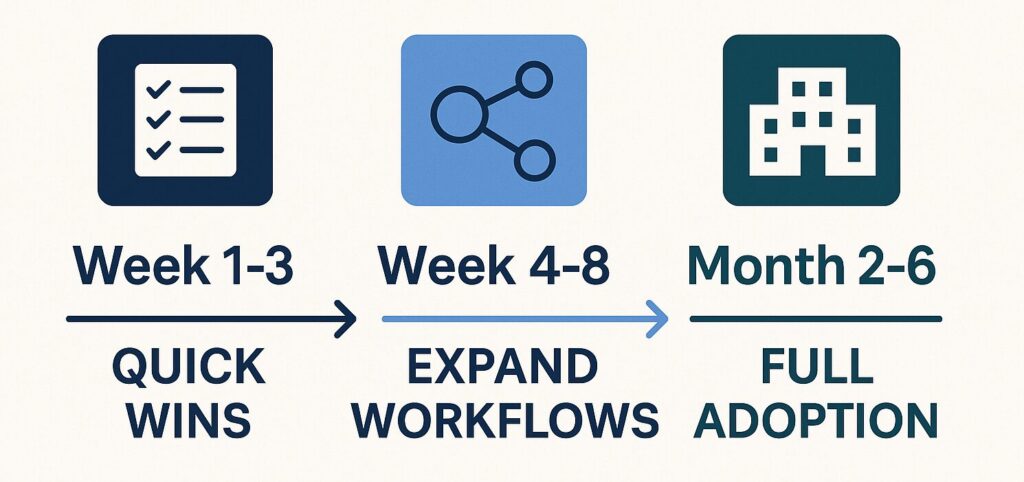
Phase 1: Quick Wins (Week 1–3)

Start with one or two of your most-used inspection forms. Most companies already have report templates they’re using today, we replicate those digitally so your inspectors see immediately that this isn’t about reinventing their process, just digitizing it.

We work hand-in-hand with you to build out the first form, configure the data fields, and set up the report output to match your current format. Your inspectors can see right away how easy it is to capture results in the field and generate a polished, professional report instantly.

Real example: An NDT company with 15 field techs came to us worried that onboarding would take too long and disrupt their operations. We had their first inspection form built and deployed into production within 20 days of contract signing. They started with one high-value form, proved it worked, and then expanded from there.

Phase 2: Expand Forms and Workflows (Weeks 4–8)

Once confidence is built with that first form, you gradually expand. Add more inspection types. Bring in scheduling and dispatching. Start using the quoting and invoicing modules.

Because Floodlight was built from the ground up around the NDT service workflow, from quote to dispatch to data collection to invoice, these modules integrate naturally. Data flows automatically, eliminating duplicate entry and reducing errors.

You’re not bolting together disconnected tools. You’re using a unified system designed for how NDT companies actually operate.

Phase 3: Full Adoption (Months 2–6)

Larger organizations often need time to align departments, standardize processes, and get buy-in across multiple locations. We support both guided rollouts (with our onboarding team walking you through each step) and self-directed adoption (for companies that prefer to move at their own pace).

The key is that you see value quickly without committing to an all-or-nothing shift. You’re always in control of the pace.


Why NDT-Specific Software Matters

Generic field service software wasn’t built for NDT. It doesn’t understand the difference between ultrasonic testing and radiographic testing. It doesn’t know how to handle ASME compliance or ISO 9712 traceability. It can’t automatically

format your reports to match client-specific requirements.

Floodlight does, because it was designed specifically for the NDT industry. That means:

  • Pre-built templates for common NDT inspections (UT, RT, MT, PT, VT) that you can customize to your needs
  • Report output flexibility that mirrors your existing format or upgrades it, so your clients see what they expect, while you gain efficiency behind the scenes
  • Role-based permissions (Administrator, Dispatcher, Field Tech, Assistant) that match how NDT companies are actually organized
  • Direct integration with inspection equipment, pulling data automatically and eliminating manual transcription errors

This isn’t about forcing you to change your processes. It’s about digitizing the workflows you already use, making them faster, more consistent, and audit-ready.


Why Early Wins Matter

In digital transformation projects, momentum is everything.

When inspectors generate their first report in Floodlight and realize it’s faster than Excel, they stop resisting. When dispatchers see that scheduling is easier with everything in one place instead of scattered across whiteboards and text messages, they become advocates. When managers get a centralized view of all inspection records and can pull compliance data in seconds instead of hours, they see the value immediately.

These quick wins create a virtuous cycle: early adopters become champions, resistance drops, and the organization gains confidence to expand further.

That 15-person company we mentioned? After their first form went live, they didn’t wait months to add more. They saw the value and moved faster because the team wanted to adopt it, not because they were being forced to.


A Realistic Timeline

Let’s be honest: fully digitizing an NDT business, from inspection reports to scheduling to invoicing, takes time. For some companies, it may be a six-month journey. But that doesn’t mean you wait six months to see benefits.

Here’s what a realistic timeline looks like:

  • First report in production: 2–3 weeks (assuming you have existing templates to work from and a point person available for setup)
  • Meaningful time savings: First month (inspectors spend less time on paperwork, reports are generated faster, clients are happier)
  • Company-wide efficiency: Within a quarter (scheduling, invoicing, and compliance become streamlined as more modules come online)

The question isn’t whether onboarding will take time. The real question is: Can you afford to delay the benefits that come from starting now?


Why NDT Companies Can’t Afford to Wait


The NDT industry is moving toward NDE 4.0: greater digital integration, real-time data access, and stronger compliance demands. Companies that stay manual risk:

  • Slower turnaround times compared to digitally-enabled competitors
  • Difficulty passing audits or satisfying increasingly demanding asset owners
  • Lower attractiveness for future acquisition, as buyers prefer companies with scalable, standardized processes

Onboarding isn’t just about today’s productivity. It’s about positioning your business for tomorrow’s expectations and ensuring you’re competitive when clients start demanding digital access, instant reporting, and audit-ready records.


Takeaway: Onboarding Is Easier Than You Think

Floodlight’s phased approach means you don’t have to pause operations or overwhelm your team to go digital. You can start small, prove value quickly, and expand at the pace that makes sense for your business.

  • Week 1–3: First form live, inspectors seeing results
  • Month 1: Time savings, faster reporting, happier clients
  • Quarter 1: Full workflow integration, company-wide efficiency

Don’t let fear of onboarding keep you tied to outdated processes. The fastest way to start seeing the benefits of digital is to simply begin.


Ready to see how fast onboarding can be?


Schedule a one-on-one demo

Learn how we've helped NDT companies go from contract signing to live production in as little as 20 days.

Webinar: Modernizing NDT Systems without Disruption

A Practical Path to NDT Modernization: Key Insights from Our Webinar

Modernizing NDT operations is no small task. Many companies know they need to digitize workflows, but the path forward often feels overwhelming. How do you make meaningful progress without disrupting daily operations? How do you get buy-in from technicians and managers? And how long will it really take to go live?

These are the questions we tackled in our recent webinar, “A Practical Path to NDT Modernization,” featuring Floodlight CEO Nasrin Azari and NDT operations expert Travis Hill. The conversation was packed with real-world lessons and advice that NDT leaders can put into action right away.


Why Modernization Matters

As Nasrin noted, staying competitive in today’s environment requires more than great inspections — it requires digital efficiency. Companies that delay modernization risk losing ground to competitors who can deliver reports faster, increase visibility, and reduce data errors.

For many organizations, the inspection report is the final product. Digitizing and streamlining that process reduces turnaround time, protects data integrity, and creates a foundation for scalable growth.


Common Challenges

Travis reminded us that modernization is never “plug-and-play.” The biggest challenges NDT companies face include:

  • Getting buy-in from both leadership and technicians

  • Allocating time for champions to lead the project

  • Avoiding disruption to ongoing operations

  • Preventing change fatigue when rolling out too much at once

Trying to modernize everything at once is the surest way to create frustration. Instead, success comes from narrowing the focus and building momentum step by step.


A No-Drama Path to Success

The discussion emphasized one key theme: start small and win early.

  • Quick wins matter. Most companies can go live with one or two inspection forms in a matter of weeks.

  • 90 days is enough. With the right champion and focus, NDT companies often see measurable results — such as faster reporting or improved accuracy — within three months.

  • Adoption requires clarity. Teams need to understand why modernization is happening and how it will make their day-to-day work easier.

  • Momentum fuels progress. Celebrate early successes, then expand into scheduling, time and expense, and other workflows when the team is ready.


Key Takeaways

  1. Have a champion. Someone must own the project internally to drive progress and keep the team aligned.

  2. Break it down. Don’t try to modernize everything at once — pick one workflow and build from there.

  3. Measure impact. Define KPIs such as report turnaround time, technician utilization, or data accuracy to prove success.

  4. Mind the people side. Minimize disruption, avoid change fatigue, and celebrate wins to keep momentum strong.


Watch the Full Webinar

This blog is just a snapshot of the insights shared during the live session. If you’d like to dive deeper into the practical steps and hear real-world stories, we invite you to watch the full webinar recording.

Webinar: How Digitalization Improves NDT Operations

How Digitalization Improves NDT Operations – Webinar Recap with Floodlight Software

On July 17, 2025, Floodlight Software hosted an engaging and insightful webinar titled “How Digitalization Improves NDT Operations”, featuring our CEO Nasrin Azari and Will Haworth, CEO of Rogue NDT and a Level III NDT expert. The session explored how modern digital tools are transforming the way non-destructive testing (NDT) companies operate—from quote to cash.

Whether you missed the live session or want to revisit specific insights, we’re excited to offer access to the full webinar recording.

💡 Webinar Highlights

The session tackled six core challenges faced by NDT companies and demonstrated how Floodlight’s all-in-one platform addresses them with real-world examples and live demonstrations:


1. Managing the Entire NDT Workflow

From quoting to scheduling, dispatching, reporting, and invoicing, Floodlight enables a seamless end-to-end process that eliminates the need for disconnected tools like spreadsheets and manual emails.

2. Streamlined Quoting & Job Cost Tracking

Floodlight simplifies quote creation using rate templates, helps avoid pricing errors, and connects quotes to actual job performance—making profitability analysis easy and accurate.

3. Improved Visibility Across Office and Field

With powerful dashboards, dispatching tools, and job consoles, teams gain real-time visibility into job status, technician schedules, and workload—all with filtering and export options for deeper insights.

4. Dynamic Report Generation

Floodlight’s reporting engine allows users to automatically generate beautiful, professional reports that adapt to the scope of the job—no more formatting nightmares in Excel or Word.

5. Labor, Equipment, and Experience Tracking

Floodlight tracks technician hours, equipment usage, and consumables in one place. Level III inspectors can automatically log certification hours using our T&E tracking system.

6. Integration with NDT Equipment

The webinar showed how Floodlight can import data directly from UT thickness gauges (like the Sonatest Wave) and other instruments, making reporting faster and more accurate.


🎥 Watch the Full Webinar Recording


If you missed the live session or want to share it with your team, we’ve got you covered.


Request the Webinar Recording

Join Our Next Webinar or Request a Demo

We’d love to have you at our next event—or walk you through a personalized demo of Floodlight in action.

Streamlining NDT Inspection Workflow with Floodlight Software

Streamlining NDT Inspection Workflows with Floodlight Software

In the fast-evolving field of Non-Destructive Testing (NDT), efficiency and accuracy are critical. Floodlight Software offers a cloud-based solution tailored to meet these needs, helping NDT inspection companies streamline their operations. This overview will focus on how Floodlight simplifies the process of importing inspection data into pre-formatted reports, enabling seamless integration with digital tools.

Effortless Data Integration

Floodlight’s cloud platform empowers inspection teams to collect, manage, and present data efficiently. As demonstrated in this walkthrough, importing inspection data from tools like ultrasonic thickness gauges directly into customizable reports has never been easier.

Step-by-Step Workflow in Floodlight

  1. Setting Up Inspection Tasks
    • Start by creating a job in Floodlight and navigating to the relevant task, such as corrosion mapping.
    • Populate general data inputs like acceptance criteria, procedures, material specifications, and inspection device details.
    • Add context-specific notes and photos directly into the task for a comprehensive record.
  2. Collecting and Formatting Data
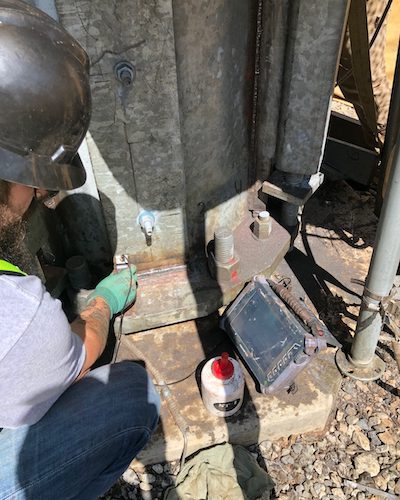
    • Use advanced tools like the Sonatest Ultrasonic Thickness Gauge to take multiple readings along the inspection area.
    • Save the collected data to a CSV file using the device’s built-in data logger.
    • Store the file on your computer for easy access.
  3. Importing Inspection Data
    • Configure Floodlight’s inspection table to match the data structure of your CSV file.
    • With a simple click of the “Import” button, seamlessly load the data into the task record.
  4. Generating Reports
    • Review your job report in real-time, with sections for general information, inspection data, photos, and comments.
    • Add a name and signature for verification before sending the finalized report to the customer.

Key Benefits of Floodlight Software

  • Improved Efficiency: Automates the import and organization of inspection data, reducing manual errors.
  • Customizable Reports: Tailored templates ensure reports meet specific customer and regulatory requirements.
  • Versatility: Compatible with various digital tools and file formats, accommodating diverse workflows.
  • Customer-Centric: Streamlined processes allow faster turnaround times and improved customer satisfaction.

Why Choose Floodlight for NDT Inspections?

Floodlight is designed specifically for the unique challenges of NDT inspection companies. By integrating digital tools and automating key processes, it helps businesses save time, reduce errors, and enhance service quality.

Learn More

Floodlight Software is transforming the way NDT companies handle inspection data. If you’d like to explore how our solution can benefit your organization, visit Floodlight Software, or contact us directly via email or phone. Let us help you achieve streamlined operations and greater accuracy in your inspections.

What is NDE 4.0 and Why is it Important?

There is a new and rapidly developing landscape in non-destructive evaluation (NDE) and nondestructive testing (NDT) called NDE 4.0. This movement toward digital transformation has the potential to drastically shift how NDE is performed in the field and how NDE / NDT businesses operate on a macro level.

To understand what NDE 4.0 is and why it’s important to both practitioners and business owners, it is first necessary to understand from where this phrase and operating practice originated.

NDE 4.0 is modeled after Industry 4.0, which has its roots in German manufacturing. Industry 4.0 is known as a subset of the fourth industrial revolution. At its essence, Industry 4.0 is the practice of automating manufacturing processes with technologies like machine learning, cyber physical systems (CPS), digital twins, the internet of things (iOT), cloud computing and artificial intelligence (AI).

For example, Industry 4.0 smart factories rely on automated machines and sensors that are connected to computer systems, allowing them to collect data, learn from the data, and then finally make production decisions.

As a forward-looking twin sister of Industry 4.0, NDE 4.0 gets a great introduction and in-depth explanation from researchers at Iowa State University in a white paper titled “NDE 4.0—NDE for the 21st Century—The Internet of Things and Cyber Physical Systems will Revolutionize NDE.

The paper states that aspects of NDE 4.0 include: 3D volume data creation and management of large files, component live data files, management of big data, real time monitoring of structure integrity, reliable inspection of individual components, NDE planning and interpretation based on modelling, and remote NDE to include expertise not available on site.

According to the paper’s authors: “NDE has to follow these trends by not only adapting NDE techniques to the new technologies, but also introducing the capability of digital systems into the inspection and maintenance processes.”

Now, based on their levels of NDE 4.0 adoption, NDT companies can harness the power of digital transformation to become more valuable to customers, more efficient in their operations, and more competitive with others in the field.

Future NDE 4.0 platforms will integrate these advanced testing instruments into a single source of record, automate inspection operations practices, improve workforce recruitment and training, and provide better customer experiences.

To learn more about NDE 4.0, listen to the NDE 4.0 Podcast: 5 Questions for an NDE / NDT Expert.

To take a deeper dive into digital transformation for NDT / NDE, download our white paper: The Business Value of Digitizing Industrial Inspection Processes.

At Floodlight Software, we look forward to the maturation of NDE 4.0, as we help to create a practical roadmap to reality for NDE and NDT businesses, allowing them to become more profitable while better serving customers. Visit our product tour page to learn more about our cloud-based inspection management platform.

Floodlight V2.0 Unveiled at ASNT 2022

We’re looking forward to the 2022 ASNT Annual Conference next week in Nashville, TN and hope you are, too.

If you’re attending the show, look for Floodlight Software in Booth #1316 in the Expo Hall.

Also, please join us Tuesday 11/1 in the Innovation Forum we’ll be sharing a sneak peek of Floodlight V2.0, including an offline-capable mobile app for field techs, improved resource management, and a streamlined user experience. Come by with your questions and to learn how we can help you to digitalize your inspection operations!!

We hope to see you there!

To learn more about Floodlight Software, take a tour.

Floodlight Software Selected as Winner for 2021 NC TECH Awards

Cary, NC (Sept. 28, 2021) – Floodlight Software has been selected as a winner of the NC TECH Awards Top 10 Startups to Watch Award. The NC Tech Awards is North Carolina’s only statewide technology awards program that recognizes innovation, growth, and leadership in the tech sector and is presented by NC TECH (North Carolina Technology Association).

Floodlight Software, based in Cary, NC, near Research Triangle Park, is a cloud-based inspection management platform (SaaS) that digitalizes industrial inspection and nondestructive testing (NDT) service operations for organizations in the oil and gas, engineering services, heavy construction, and transportation infrastructure industries.

“For over 20 years, NC TECH has celebrated companies, organizations and individuals for outstanding achievement at the NC TECH Awards. As a finalist this year, Floodlight Software has distinguished itself as one of the state’s innovative and emergent leaders,” said Brooks Raiford, NC TECH’s President and CEO.

“There are some great companies included representing the best startups in the state,” said Nasrin Azari, CEO of Floodlight Software. “We are honored to be among the finalists for this distinguished award from NC TECH.”

About NC TECH
NC TECH is a not-for-profit, membership-driven trade association and the primary voice of the technology industry in North Carolina. NC TECH’s mission is to foster growth and champion innovation in North Carolina’s tech sector while providing a voice for the tech community. NC TECH’s membership includes 600 member companies, organizations, and institutions employing more than 200,000 workers in North Carolina. For more information, visit nctech.org.

About Floodlight Software
Designed with direct input from industrial inspection and nondestructive testing professionals, Floodlight Software enables service providers to deliver more inspections faster and accelerate time to cash. Our affordable, cloud-based inspection management platform includes task-specific modules, giving managers, dispatchers, and technicians the information they need, when and how they need it.

To see Floodlight Software in action, schedule a demo today:

Fill out my online form
Scroll to top