
Future-Proofing Your Business

Across the NDT landscape, consolidation is accelerating. Larger firms are acquiring smaller inspection companies to expand geographic reach, add service lines, and pick up client portfolios. Private equity groups have entered the market, hunting for businesses with recurring revenue and efficient operations.
This isn’t a future trend. It’s happening now. And it raises a question every owner should be able to answer: if a buyer showed up tomorrow, how attractive would your company be?
Increasingly, the answer comes down to one thing: whether your operation runs on digital systems or is still stuck in the spreadsheet era. That single distinction moves valuations, shortens deals, and decides which companies get the call in the first place.
| 2× Sale-price gap between digital and manual shops with the same revenue |
6–8× EBITDA multiple a digital, documented operation can command |
$1.22B Projected NDT software market by 2030, growing 12% a year |
🌊 NDT Industry Consolidation Isn’t Coming. It’s Here.
Four forces are driving acquisition activity in NDT at the same time, and they reinforce each other:
|
🏗️
Aging infrastructure creates demand Pipelines, refineries, and power plants built decades ago need more frequent inspection as they pass design life. Larger companies need capacity fast, and buying it is quicker than building it. |
👷
A shortage of certified inspectors Not enough qualified technicians are entering the field to replace those retiring. Acquiring a company with an established, certified team is often the only practical way to grow a workforce. |
|
🏭
Asset owners want fewer vendors Refineries and chemical plants prefer inspection partners who can cover multiple methods across multiple sites. Consolidation is how those full-service providers get built. |
💼
Private equity sees opportunity PE firms view NDT as recession-resistant with recurring revenue. They are actively buying companies that show operational efficiency and the ability to scale. |
“The NDT software market is projected to grow at 12.16% annually and reach $1.22 billion by 2030.”
That growth is driven in large part by acquirers who treat digital systems as essential infrastructure for a scalable NDT business. When they buy, they are buying that infrastructure as much as the revenue.
🔍 What Buyers Evaluate When Acquiring an NDT Company
Buyers don’t just look at top-line revenue. They are pricing risk, scalability, and how much work it takes to fold you in. Six things carry most of the weight:
| 🔁 Repeatability
Can the business run without depending on tribal knowledge? If everything hinges on a few people who “know how it works,” that’s a risk buyers price down. |
🗄️ Recordkeeping quality
Are inspection records organized, compliant, and retrievable? Or scattered across file cabinets and personal laptops? Nobody wants to inherit hidden liability. |
| 📐 Process standardization
Do technicians follow one consistent workflow, or does everyone do it their own way? Standardization means lower integration cost and faster payback for the buyer. |
📊 Data visibility
Can management show performance and margins on demand? “We’d have to pull that together” reads as a black box. “Let me show you” reads as a business in control. |
| ✨ Customer perception
Does the company look modern and professional? Client relationships transfer with the sale. Branded reports and client portals signal relationships worth paying for. |
🛡️ Compliance posture
Is the company audit-ready, or would a regulatory review turn up problems? Buyers will not pay a premium to inherit compliance risk. |
Companies still running on paper and spreadsheets consistently fail these tests. Not because the work is bad, but because the system of record can’t prove the work is good.

⚖️ Same Revenue, Different Valuation
Put a manual operation and a digital one side by side, and the buyer sees two very different risk profiles, even at identical revenue. The same six factors either drag your multiple down or push it up:
Every line on the left is a reason to pay less. Every line on the right is a reason to pay more. The work is the same. The system of record is what changes the number.
💰 Two NDT Companies, Two Valuations
Here’s the same idea in dollars. Two NDT companies, identical revenue and headcount. The only real difference is how they run.
Illustrative. On a business with roughly $500K EBITDA, a 3–4× multiple lands near $1.5M–$2M and a 6–8× multiple near $3M–$4M. Same revenue, same team, twice the outcome.
Same revenue. Same team size. Company B sells for roughly twice as much, because the buyer is purchasing a system they can trust and scale, not a pile of spreadsheets they’ll have to rebuild.

📂 The Due Diligence Test
Due diligence is where the valuation gets real. The buyer asks one simple question, and how you answer tells them everything about how you run the business.
|
❌ THE MANUAL COMPANY
Buyer: “Show us inspection records for Client X, 2022 to 2024.” You: “Give us about a week. Some are on Steve’s laptop, some in the file cabinet, some in the shared drive Bob manages.” Buyer’s takeaway: If the records are this scattered, what else is missing? Concern about organization, compliance, and accuracy. |
✅ THE DIGITAL COMPANY
Buyer: “Show us inspection records for Client X, 2022 to 2024.” You: “Here you go.” Pulls up the complete history with audit trails in 30 seconds. Buyer’s takeaway: This is a serious, organized operation. Confidence in the data, the compliance, and the price. |
Due diligence isn’t only about handing over information. It’s a live demonstration of how mature your operation is. Digital systems prove, in real time, that you run a business worth buying.
🏢 Even If You’re Never Selling Your NDT Business
Maybe a sale is the furthest thing from your mind. It still matters, because the exact traits that make a company attractive to a buyer are the traits that make it stronger to run every single day.
|
🧰
Fewer operational headaches Standardized processes mean fewer mistakes, less rework, and smoother days. You spend less time fixing problems and more time doing the work. |
🧯
Lower compliance stress Digital audit trails keep you ready for a regulatory review at any time. No scramble when auditors show up on short notice. |
|
🤝
Better client relationships Professional reporting and a client portal set you apart from competitors and win more repeat business. |
📈
Easier, cheaper growth Scalable systems let you add inspectors without drowning in overhead. Growth becomes profitable instead of painful. |
|
🔑
Real succession options Whether you sell, pass it to family, or hand it to employees, digital systems make the transition smooth. The business isn’t trapped in your head. |
😴
Fewer 2 a.m. worries When the process is documented and the data is safe, the business can run a day without you in the middle of every job. |
“Companies implementing comprehensive field service management software report productivity increases averaging 24% within the first year.”
Being “acquisition-ready” isn’t about wanting to sell. It’s about running a professional operation. The premium is just the market putting a price on something you already feel every day.

📞 The Acquisition Offer You Didn’t See Coming
Here’s a scenario that plays out more often than owners expect. You’re not looking to sell. Then a larger NDT company calls: “We’re expanding into your region and acquiring established firms. Would you be open to a conversation?”
It’s an unsolicited offer, often at attractive terms, because they want you specifically. How that call ends depends on a decision you made long before the phone rang.
|
✅ If you’re digital
You respond quickly. The books are clean, operations are documented, due diligence goes smoothly. You negotiate from strength and command a premium. |
❌ If you’re manual
You scramble to assemble records. Due diligence surfaces gaps. The buyer lowers the offer or walks. The opportunity quietly disappears. |
Opportunities favor the prepared. You may not be looking to sell today, but you should always be ready to be bought.
⏰ Why Waiting to Digitize Costs You
Some owners plan to “get organized” right before they sell. The problem: buyers are shopping now, and the best targets get taken first. If consolidation keeps accelerating, the companies that wait will find the market has moved on without them.
- ✕ Fewer buyers. The strongest targets are already acquired.
- ✕ Lower valuations. Remaining buyers hold the negotiating power.
- ✕ Longer sale cycles. Due diligence drags with manual records.
- ✕ Fewer options. Less competitive bidding, less leverage.
The time to prepare for acquisition isn’t when you’re ready to sell. It’s now, while you still have the runway to build the systems that raise the number.
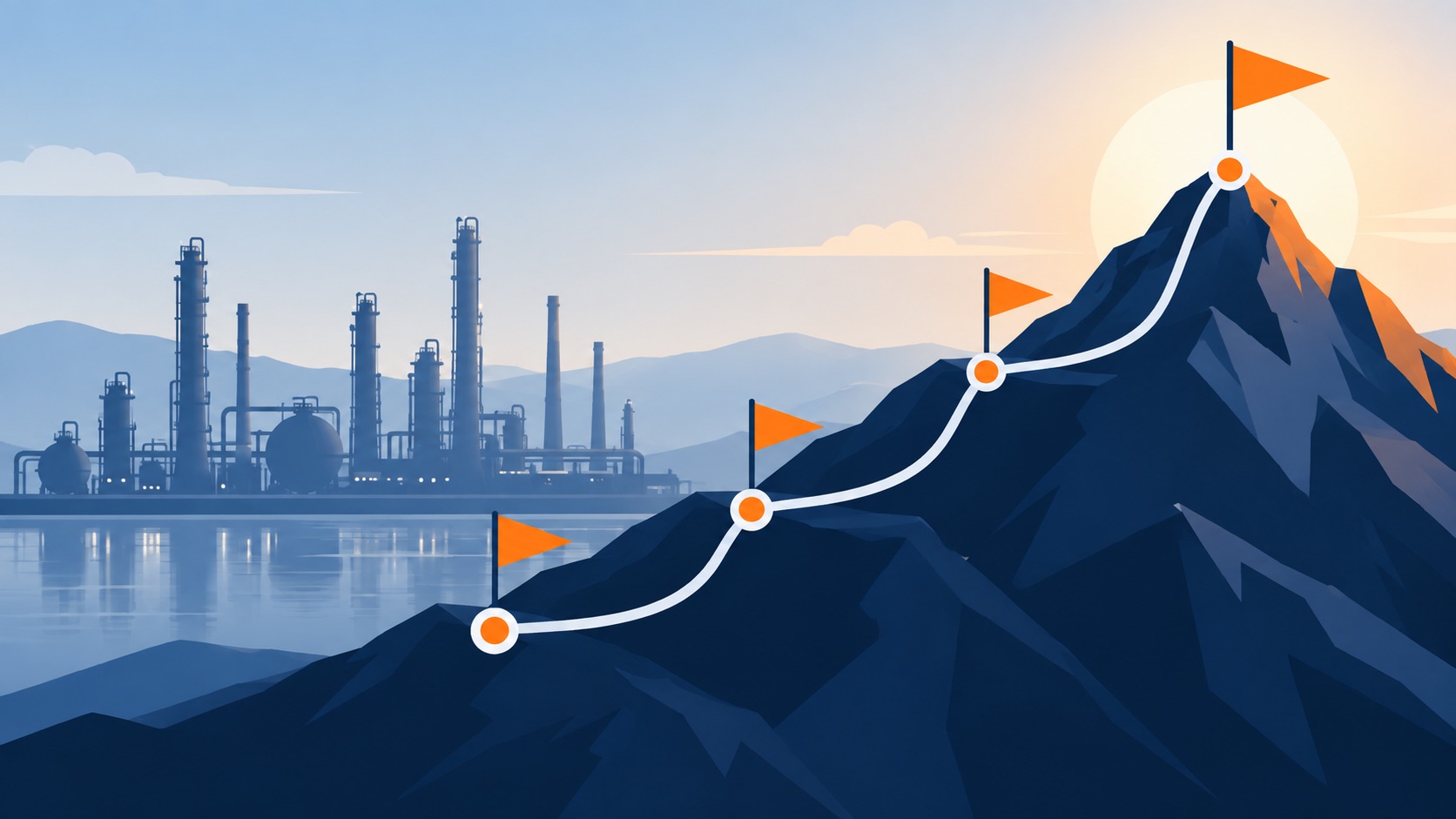
🗺️ Your 12-Month Path to an Acquisition-Ready NDT Business
Getting digital-ready isn’t an overnight project, but it’s more approachable than most owners assume. A practical path spreads it across four quarters, and every stage pays off in daily operations long before any sale:
Move to digital inspection forms, standardize your report formats, and start keeping records digitally.
Turn on audit trails for every inspection, link inspector certifications to records, and track equipment calibration automatically.
Launch client portal access, hit same-day report delivery, and give clients self-service access to their records.
Generate performance analytics, track margins by client and service type, and monitor utilization and efficiency.
🎯 Bottom Line: Digitalization Is a Valuation Multiplier
Acquirers want efficient, modern companies with predictable processes and documented systems. They pay premiums for businesses that integrate easily and scale reliably. Manual systems drag value down because they represent risk, integration cost, and uncertainty. Digital systems lift value because they prove professionalism, scalability, and control.
Whether you sell in two years or twenty, digitalization positions you to win either way. If you sell, you command a premium. If you keep operating, you simply run a better business. Purpose-built NDT reporting software is how you get there, and it starts with the report itself, which is the subject of Win More Work with Better Reports.
The question was never whether to digitalize for acquisition readiness. The question is what it’s costing you not to, every month, in daily operations today and in your company’s value tomorrow.
❓ Frequently Asked Questions
Does digitalizing my NDT business really increase its sale value?
Yes, and the mechanism is straightforward. Buyers price risk and integration effort, not just revenue. Documented, audit-ready, scalable operations lower both, which supports a higher EBITDA multiple. Two companies with identical revenue can sell for very different amounts based on how they run.
What do buyers look for when acquiring an NDT company?
Repeatable processes that don’t depend on a few key people, organized and compliant recordkeeping, standardized workflows, on-demand data visibility, professional client relationships, and an audit-ready compliance posture. Paper-and-spreadsheet operations tend to fall short on all six.
How long does it take to become acquisition-ready?
A practical path runs about 12 months in four phases: operational foundation, compliance strength, client experience, and data visibility. You don’t have to wait until the end to benefit. Each phase improves daily operations as soon as it’s in place.
We’re not planning to sell. Is this still worth it?
Absolutely. The traits that raise your valuation are the same ones that reduce rework, ease compliance, strengthen client relationships, and make growth profitable. Acquisition readiness is really just a well-run business, and it also protects your options if an unsolicited offer arrives.
Isn’t switching from spreadsheets to inspection software disruptive?
Less than most expect. Teams typically migrate one inspection type at a time and keep spreadsheets as a backup until they no longer reach for them. Live jobs continue uninterrupted, and inspectors usually stop wanting to go back within the first month.
The question isn’t whether you’ll eventually modernize. It’s whether you’ll be ready when the offer, the audit, or the best year of your life shows up first.
Book a one-on-one demo and we’ll show you how digitalizing your operation raises both your day-to-day efficiency and your company’s value, often paying for itself in the first quarter.
Curious where the hidden costs hide today? Read Why Excel Isn’t Enough for Today’s NDT Inspections.