

Compliance Made Simple
Quick Navigation:
Compliance Made Simple: Digital Recordkeeping for NDT Companies
Introduction: Compliance Is the Core of NDT
It’s 9 AM Monday. An auditor just arrived unannounced. Do you feel confident or panicked?
Non-Destructive Testing isn’t just about finding defects—it’s about proving compliance. Whether it’s ASME codes, ISO standards, or client-specific requirements, inspection records are the evidence that work was done properly and safely.
Digital platforms reduce record retrieval time from hours to seconds, and audit preparation time by up to 87%.
For many NDT companies, compliance is both a necessity and a burden. Paper files, Excel spreadsheets, and manual signatures make audits stressful and record-keeping inconsistent. Digital platforms change that, making compliance simpler, faster, and more reliable.
The Challenges of Manual Compliance
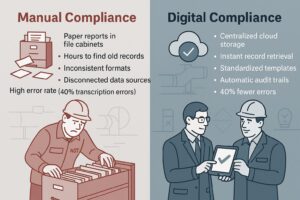
1. Paper trails that disappear
Paper reports can be lost, damaged, or misfiled. When an auditor asks for a record from five years ago, finding it can take hours or days. Sometimes, you never find it at all.
2. Inconsistent record-keeping
Different inspectors use different formats. Missing data fields or inconsistent terminology create audit headaches. One inspector writes “pass,” another writes “acceptable,” and a third leaves it blank. Auditors notice.
3. Limited traceability
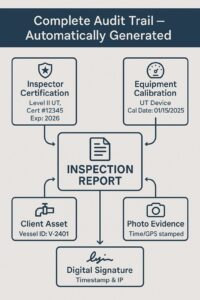
Auditors want to see the full chain: inspector qualifications, equipment calibration records, inspection results. In manual systems, these pieces live in separate file cabinets, folders, or someone’s truck. Connecting them during an audit means scrambling.
4. Regulatory risk
Failure to produce complete, traceable records can lead to fines, failed audits, or lost contracts. In some cases, it can shut down a job site until you prove compliance.
“Digital transformation pushes inspection software into the center of plant operations. DICONDE-compliant images seamlessly integrate with scanners and asset-management portals, eliminating paper logbooks and reducing transcription errors by 40%.”
— Mordor Intelligence NDT Software Market Report
That 40% error reduction isn’t just about convenience. In compliance-heavy industries like NDT, errors in records can mean the difference between passing and failing an audit.
How Going Digital Simplifies Compliance
Digital platforms like Floodlight are built around compliance, not as an afterthought:
Centralized record storage
All inspection reports, certificates, and equipment records are stored in one secure system. No more hunting through file cabinets or calling retired inspectors to ask where they kept the 2019 turnaround records.
Standardized templates
Inspection forms ensure required fields are always captured, reducing the risk of missing data. If ISO 9712 requires a technician certification number, the system won’t let you submit a report without it.
Traceability built in
Each inspection is automatically linked to the technician, the equipment used, and the calibration status. This creates a complete audit trail without any extra work from your team.
Instant retrieval
Need a record from three years ago? Search and pull it up in seconds, not hours. Auditors appreciate speed, and so do clients who need documentation for their own compliance.
Customer portal access
Provide clients direct access to their inspection history, reducing back-and-forth requests. When an asset owner needs proof of last year’s vessel inspection, they can pull it themselves instead of calling you at 4:30 PM on a Friday.
“87% of customers believe it is important that companies be transparent about data and how it’s used, especially in regulated industries.”
— Salesforce Consumer Trust Research
For NDT companies, transparency isn’t optional. Digital recordkeeping with client portal access shows your customers exactly what you’ve done and when, building trust that manual systems can’t match.
Why Compliance Is a Competitive Advantage
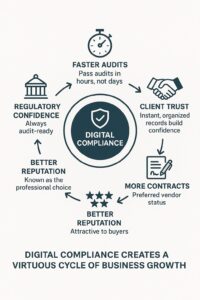
Meeting compliance isn’t just about avoiding penalties. It’s also about winning business:
Clients trust companies with strong record-keeping
An asset owner deciding between two vendors will choose the one that can provide instant, organized reports. When your competitor shows up with a filing cabinet and you show up with a searchable database, the choice is obvious.
Audits become showcases instead of scrambles
Instead of panicking when an auditor arrives, you demonstrate professionalism and organization. You’re the company that has its act together. That reputation spreads.
Acquisitions favor digital-ready companies
Buyers look for businesses with standardized, reliable compliance processes. If you’re planning to sell in the next 5-10 years, digital recordkeeping directly increases your company’s value.
Regulatory requirements are getting stricter, not looser
“Over 60% of U.S. bridges, pipelines, and boilers now exceed design life, triggering tighter risk-based inspection schedules. Asset owners deploy enterprise NDT suites that automate anomaly detection and maintain audit trails.”
— Mordor Intelligence NDT Market Analysis
As aging infrastructure demands more frequent inspections, regulatory scrutiny increases. The companies that can prove compliance quickly and thoroughly will be the ones that keep working.
See How Digital Recordkeeping Works
Watch a 5-minute demo of instant record retrieval and automated audit trails.
The Audit Scenario: Two Companies, Two Outcomes
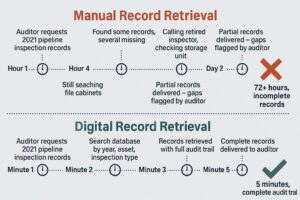
A refinery schedules an unannounced compliance audit.
Company A (manual) scrambles to find records. Files are missing. One inspector retired last year and took his records with him. Staff spend three days digging through file cabinets and old laptops. The auditor flags gaps in calibration records and inconsistent inspector certifications. The refinery delays the next project until compliance is proven.
Company B (digital with Floodlight) pulls up records instantly. Reports are consistent. Calibration records are automatically linked to inspections. Inspector certifications are current and attached to every report. The auditor spends two hours instead of two days and leaves satisfied. The refinery adds Company B to their preferred vendor list.
Six months later, when the refinery has another turnaround, which company gets the call?
What Digital Compliance Actually Looks Like
Here’s what changes when you move from manual to digital record-keeping:
| Before (Manual) | After (Digital) |
|---|---|
|
|
The work doesn’t get harder. It gets automatic.
Common Concerns About Digital Recordkeeping
“What if we lose internet access?”
Most digital platforms work offline. Inspectors capture data in the field without connectivity, then sync when they’re back online.
“What about data security?”
Cloud-based systems like Floodlight use enterprise-grade encryption and regular backups. Your data is more secure than a filing cabinet that anyone can access.
“Will regulators accept digital records?”
Yes. Standards bodies and regulatory agencies accept and often prefer digital records. The key is ensuring your system maintains proper audit trails and cannot be altered without documentation.
“What if the system goes down?”
Reputable platforms have uptime guarantees exceeding 99.9%. Compare that to the risk of a fire, flood, or simple human error destroying your paper records.
Bottom Line: Compliance Doesn’t Have to Be Pain
Regulation is the backbone of the NDT industry. You can’t avoid it. But you can decide how much it costs you in time, stress, and lost opportunities.
With digital record-keeping, compliance becomes a natural part of your daily work, not a separate burden you deal with when auditors show up.
Digital systems don’t just protect your company from fines and failed audits. They position you as the professional, organized, trustworthy vendor that asset owners want to work with.
The companies winning the best contracts aren’t the ones with the most certifications. They’re the ones who can prove their work instantly.